Hands-on plantar fasciitis relief using Active Release Therapy, myofascial release, and targeted exercise therapy — addressing the tight calf, weak arch, and movement pattern actually causing your heel and foot pain.
Plantar fasciitis is almost never just about the bottom of your foot. In most cases, it's tight calf muscles and Achilles tendons pulling on the heel, combined with weak intrinsic foot muscles that let the arch collapse under load every time you take a step — often aggravated by a sudden jump in mileage, hours spent standing on hard floors, or worn-out footwear.
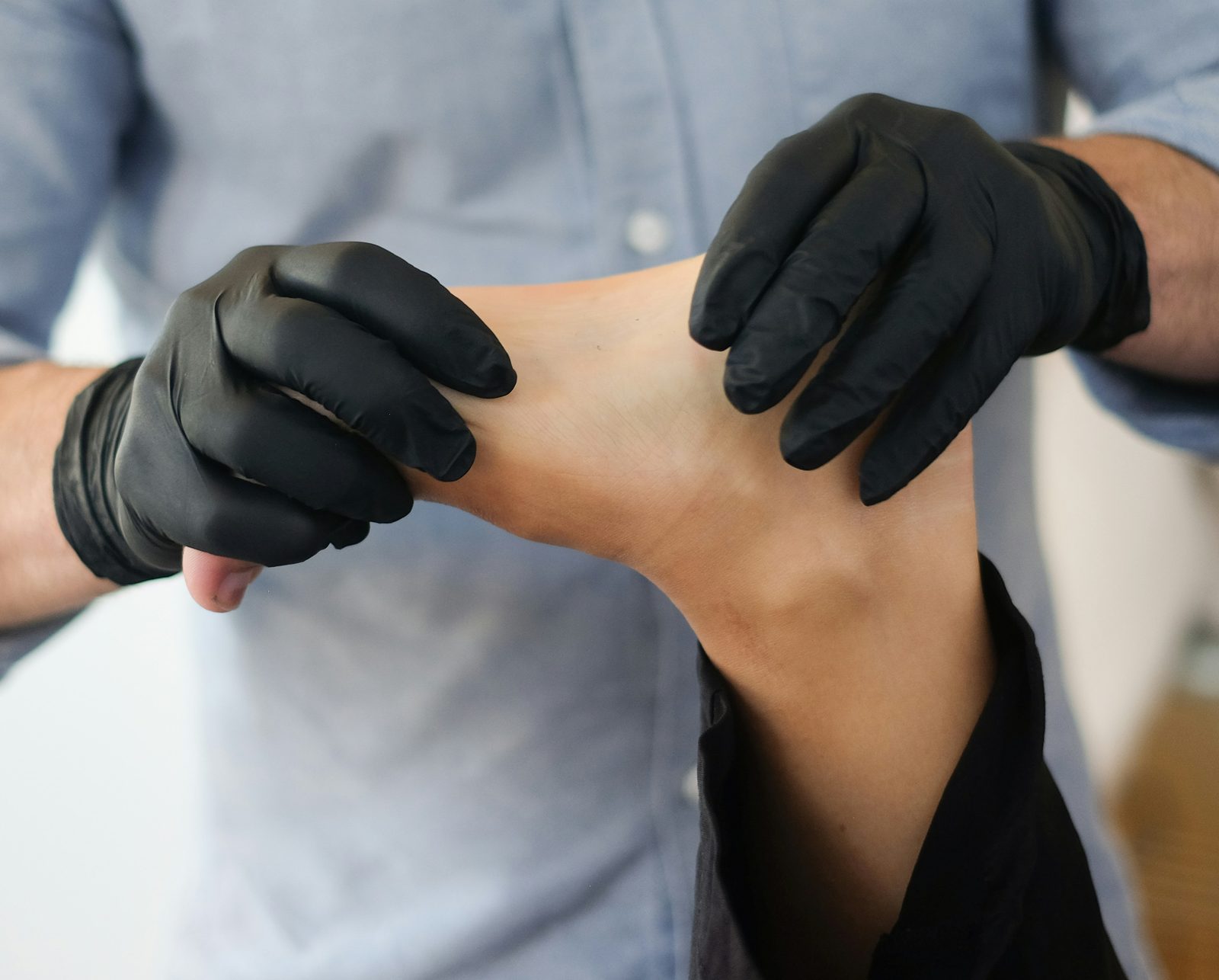
Because of that, treatment at High Amplitude Health follows a specific sequence rather than just working the heel. It starts with assisted stretch therapy to the glutes and hamstrings, then myofascial release therapy through all four muscle chains of the affected leg — posterior, anterior, medial, and lateral — to reduce the tension ultimately feeding down into the plantar fascia. From there, Active Release Therapy goes directly onto the plantar fascia itself, restoring pliability and elasticity to a tissue that's naturally rigid and prone to microscopic tearing. Only once that tension is addressed does strengthening the arch actually hold.
The other half of lasting relief is strengthening the roughly 22 small muscles on the bottom of the foot that are meant to support the arch — muscles that go weak from a lifetime spent in thick-soled, arch-supported shoes. Beyond in-office exercise therapy, patients are given specific take-home tools: balancing barefoot on a stability disc or Bosu ball, which makes the plantar muscles contract naturally to hold you steady, and walking barefoot in sand at the beach, where the shifting surface makes your toes grip and those same muscles fire.
Many of the patients we see for plantar fasciitis aren't coming in for chiropractic care specifically — they're runners, retail and healthcare workers on their feet all day, and weekend walkers looking for real plantar fasciitis exercises and hands-on relief that gets to the source, not another set of insoles that only manage the symptom.
Plantar fasciitis has a handful of common, treatable causes — here's what we see most often in San Mateo patients.
The calf and Achilles are the most direct link to the heel, but the posterior, anterior, medial, and lateral muscle chains of the same leg can all hold tension that transmits down into the plantar fascia — increasing the pull on it with every step.
The bottom of the foot has about 22 small muscles built to actively support the arch — but a lifetime in shoes with thick soles and built-in arch support lets them go weak from disuse. Without that support, the arch flattens under load with each step, over-stretching the plantar fascia and straining it most at its attachment points, where its rigid, low-elasticity fibers develop microscopic tears.
Runners who ramp up distance or intensity too quickly place repetitive load on the fascia faster than it can adapt.
Retail, healthcare, food service, and other jobs that keep you on your feet all day on hard flooring are one of the most common causes of plantar fasciitis we see.
Shoes that have lost their cushioning or don't support your specific foot type let the fascia absorb more impact and strain than it's built for.
Excess inward rolling of the foot with each step places uneven, repetitive strain on the plantar fascia — often correctable with the right combination of soft tissue work and footwear guidance.
A heel spur is often a byproduct of long-standing fascia tension rather than the actual cause of pain — which is why treating the underlying tightness typically brings relief with or without the spur present.
Most patients notice a reduction in that sharp first-step morning heel pain within the first few visits. Dr. John will identify exactly what's driving your plantar fasciitis — and build a plan to fix it at the source.
Serving San Mateo, Burlingame, Foster City, Redwood City, Belmont & surrounding areas since 2010.
Book Your First Visit →Dr. John Blenio has treated plantar fasciitis in San Mateo patients for over 16 years — from runners managing a mileage-related flare-up to retail and healthcare workers dealing with heel pain from long days on hard floors. His protocol follows a specific sequence: assisted stretch therapy to the glutes and hamstrings, myofascial release through all four muscle chains of the affected leg, Active Release Therapy directly on the plantar fascia itself, and a strengthening program for the small muscles on the bottom of the foot — including specific take-home tools like stability discs, Bosu balls, and barefoot walks in the sand.
Plantar fasciitis is rarely just a heel problem. It's usually a combination of tension running through the leg's muscle chains, weak intrinsic foot muscles, and how you're actually walking or standing — which is why Dr. John assesses all of it at your first visit.
Whether your heel pain started last month or has been building for years, the goal is the same: find the true cause, release and strengthen what's actually driving it, and give you a plan to keep it from coming back.
Join hundreds of San Mateo patients who've found lasting plantar fasciitis relief — without drugs, injections, or surgery — using Dr. John's hands-on, root-cause approach.
Schedule an AppointmentOr call / text us: 650-735-1716