Hip pain often starts in a muscle or tendon somewhere else — not the hip itself. We find the actual source and treat it directly.
Hip pain rarely comes from one single thing. Most of the time it's a combination of tight hip flexors, an irritated bursa, and a pelvis that's sitting slightly out of alignment — often built up over months or years of desk sitting, running, or favoring one side without realizing it.
Because the hip is surrounded by some of the largest, most overworked muscles in the body, standard rest and stretching often only provide short-term relief. At High Amplitude Health, we combine chiropractic adjusting with Active Release Therapy and targeted soft tissue work to release the muscles pulling the joint out of position, not just ease the ache.
Whether your hip pain shows up as a dull outer-hip ache after sitting, a sharp catch when climbing stairs, or one hip that feels visibly higher than the other, identifying which of these is actually happening is the first step to fixing it — and it's usually clear within the first visit.
Around the hip, that tension tends to concentrate in a specific handful of spots: the glute medius and glute minimus (the smaller glute muscles that stabilize your pelvis with every step), the TFL (a hip muscle that feeds into the IT band), the hip flexors, and the tendons surrounding the sacroiliac (SI) joints — the joints connecting your pelvis to your spine. Tendons aren't muscles, but they can hold real tension of their own, and tightness in nearby muscles can transmit through the fascia — the connective webbing wrapped around every muscle in the body — pulling on tendons and joints some distance from where the actual tightness is. That's a big reason hip pain can feel like it's coming from one spot when the real driver is tension somewhere else nearby.
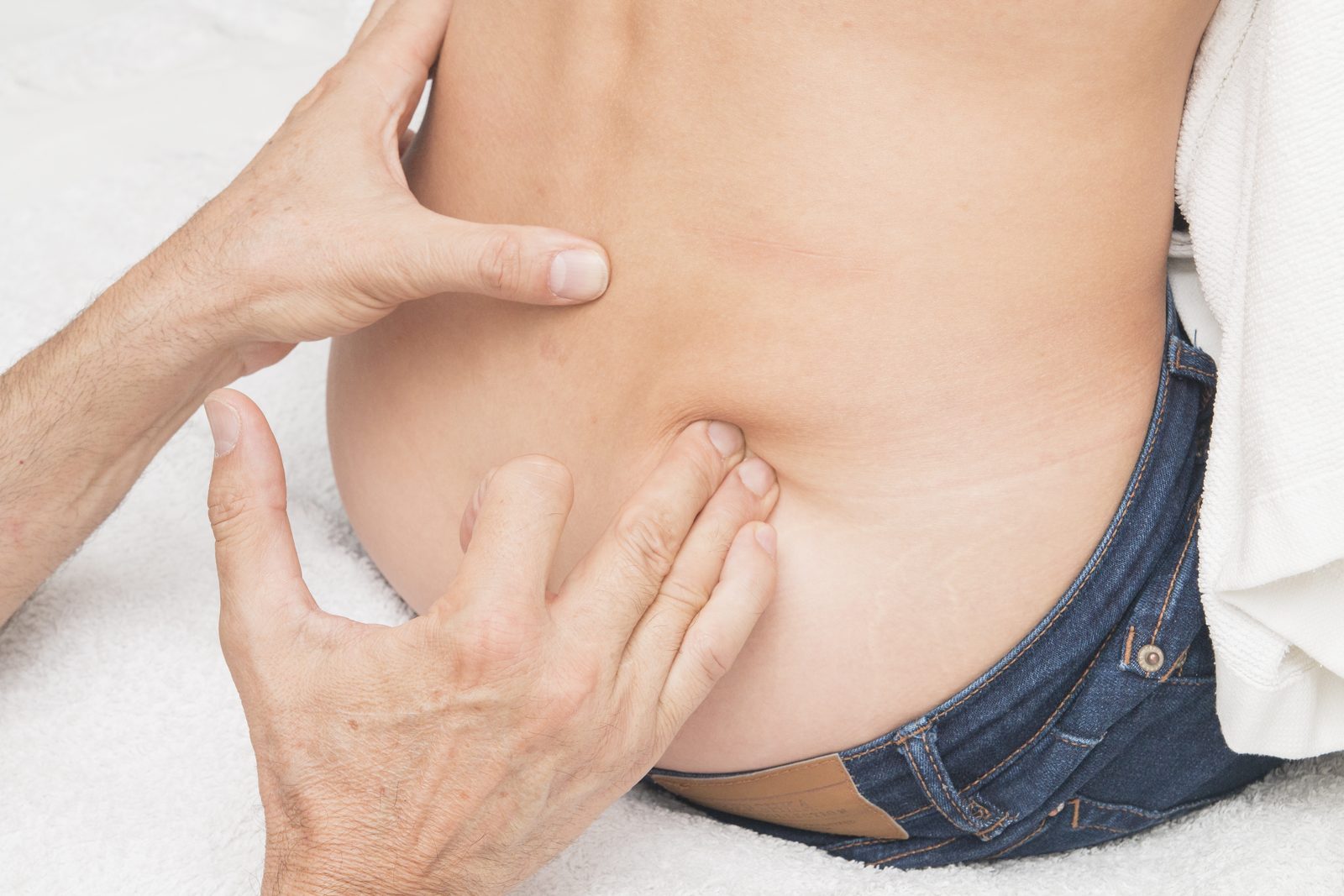
Hip pain has a handful of common, treatable causes — here's what we see most often in San Mateo patients.
Inflammation of the fluid-filled sac cushioning the hip joint, usually aggravated by tight surrounding muscles pulling on the joint — common in patients who sleep on their side or sit for long stretches. We break down why this specifically flares up at night in more detail.
The SI joints connect your pelvis to your spine, and the tendons around them can hold real tension of their own — often pulled tight by nearby muscles like the glute medius, glute minimus, and TFL through the surrounding fascia. This kind of tension-through-connection is easy to miss, since the ache can show up away from where the actual tightness is.
Hours in a chair shorten the hip flexors and pull the pelvis forward, creating a dull ache that's often worse first thing in the morning or after standing up from sitting.
One hip sitting higher than the other is usually a functional imbalance from muscle tightness on one side, not a true leg-length difference — and it typically responds well to targeted care.
Runners and cyclists place repetitive load on the hip flexors and IT band, leading to gradual tightness and pain that builds up rather than starting from a single injury.
A tight piriformis muscle deep in the hip can mimic hip joint pain or even radiate down toward the leg — Active Release Therapy is particularly effective here.
When the glutes aren't doing their share of the work, the hip flexors and low back take over — a pattern that leads directly to recurring hip pain, especially with walking or stairs.
Pain or restriction elsewhere in the kinetic chain often causes the hip to move differently to compensate, which can create hip pain that started somewhere else entirely.
Most patients with muscle- or alignment-related hip pain notice meaningful improvement within just a few visits. Dr. John will identify exactly what's driving your pain — and fix it at the source.
Serving San Mateo, Burlingame, Foster City, Redwood City, Belmont & surrounding areas since 2010.
Book Your First Visit →Dr. John Blenio has treated hip pain in San Mateo patients for over 16 years — from desk workers with chronically tight hip flexors to runners and cyclists managing overuse-related bursitis. His approach combines spinal and pelvic adjusting with Active Release Therapy and corrective exercise into one integrated plan.
Hip pain is rarely just a joint problem. It's usually a combination of muscle tightness — often concentrated in the glute medius, glute minimus, TFL, and the tendons around the SI joints — alignment, and movement pattern. Because tight muscles can transmit tension through the fascia to nearby tendons and joints, Dr. John treats the whole connected region rather than just the spot that hurts: sustained-compression myofascial therapy and Active Release Therapy first, assisted stretching of the glutes and hamstrings, vibration therapy to release any lingering muscle tone, and — for most patients — chiropractic adjusting to the lumbar spine and hips to finish restoring joint motion.
Whether your hip pain started last month or has been building for years, the goal is the same: find the true cause, correct it with hands-on care, and give you the tools to keep it from coming back.
Join hundreds of San Mateo patients who've found lasting relief from hip pain and bursitis — without drugs, injections, or surgery — using Dr. John's hands-on, root-cause approach.
Schedule an AppointmentOr call / text us: 650-735-1716